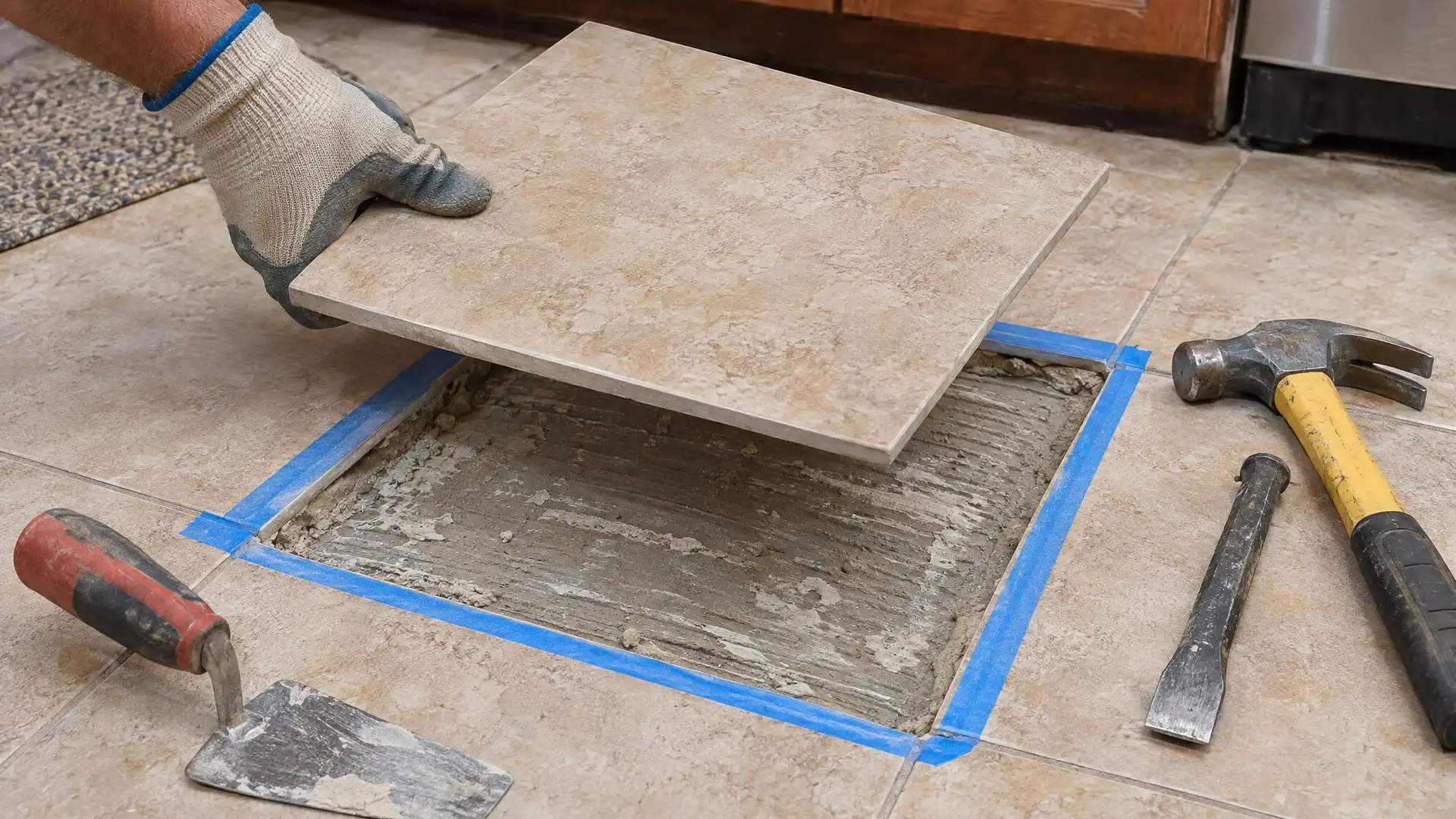
A dropped pot, a settling house or a hollow spot in the mortar can crack a tile. Whether it is tile flooring repair in a kitchen or a chipped wall tile in a bathroom, the damage is usually limited to a few pieces, and those can be replaced individually.
The skill is in removing the broken tile without chipping the ones around it, and in understanding whether it was an accident or a symptom.
Why Tiles Crack
The pattern of the damage tells us a lot.
- A single tile with a star-shaped crack: impact
- A crack running in a straight line across several tiles: a subfloor seam or slab crack below
- Tiles that sound hollow and then crack: poor mortar coverage at installation
- Cracks radiating from a doorway or corner: structural movement
- Loose tiles with intact faces: a failed bond, often from moisture
How We Replace a Tile
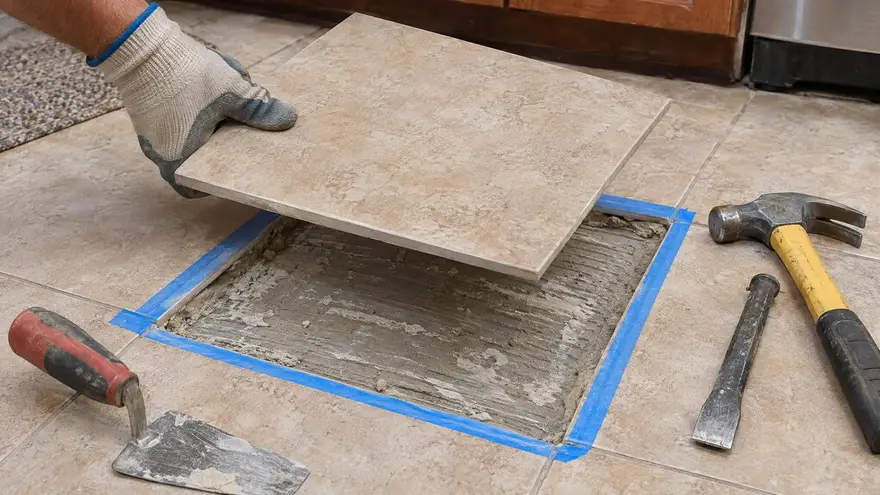
We cut out the surrounding grout first so force is not transferred to neighboring tiles. The cracked tile is broken out from the center, the old mortar is ground off the substrate, and any crack beneath is treated with an isolation membrane. The new tile is set to the same height as its neighbors and grouted to match.
Hollow but intact tiles can sometimes be re-bonded by injecting adhesive beneath them, which avoids the matching problem altogether.
Finding a Match
Look for spare tile in the basement, garage or attic before your estimate. Without spares, we source the closest match available or take a tile from a hidden area. Where no match exists, replacing a deliberate section, such as a border or a threshold strip, can look planned. For wider problems see floor tile installation.
Need something else? See all of our tile repair & regrouting services, or learn more about your local tile contractor in Arlington, VA.