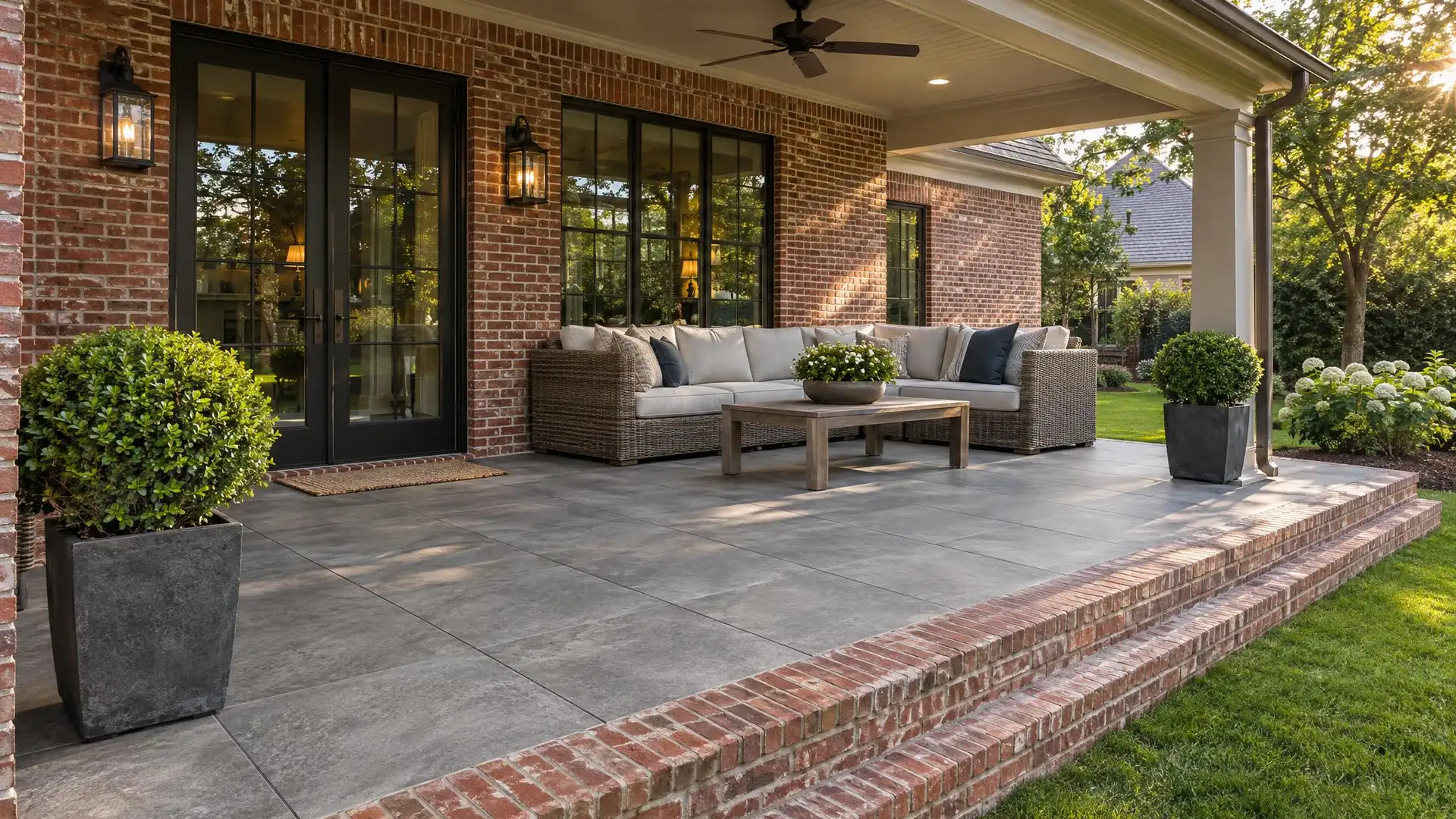
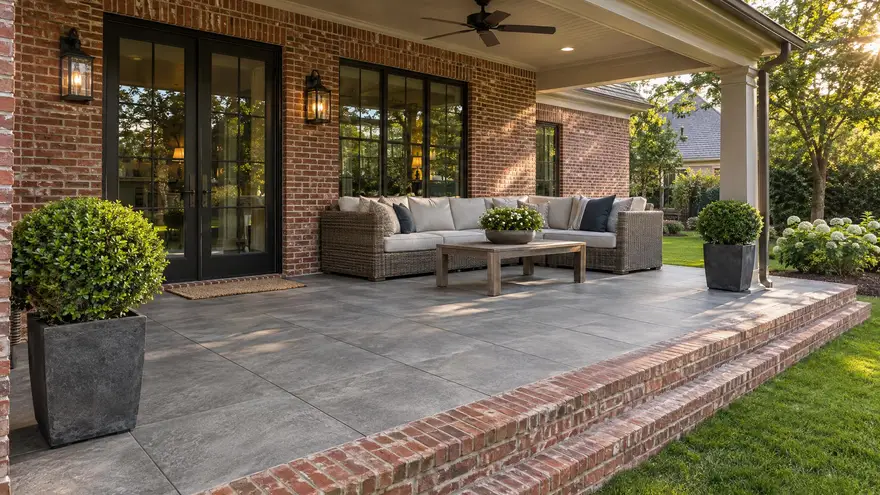
A tiled porch or patio extends your living space and looks sharper than bare concrete. Outdoors, though, tile faces conditions that never occur inside: standing water, temperature swings and freezing.
Most outdoor tile failures in this region come down to water getting beneath the tile and freezing. Everything we do outside is aimed at preventing that.
What Outdoor Tile Requires
These are not optional in a freeze-thaw climate.
- Porcelain or dense stone rated frost-proof for exterior use
- A textured surface with good wet slip resistance
- A sound concrete base sloped to shed water
- Mortar rated for exterior use, with near-total coverage so no voids hold water
- Movement joints at regular intervals and at every wall and column
- A flexible sealant in those joints, not grout
Where We Install It
Covered porches, patios on a concrete slab, front stoops and steps are the usual projects. An existing slab must be solid, properly sloped and free of active cracks, or we address those first. On steps, the front edge of each tread gets a bullnose or slip-resistant nosing.
Thicker porcelain pavers can also be set on a prepared base or pedestals for some patios and roof decks, which is a different system from bonded tile and one we can advise on.
Timing
Exterior tile work needs mild, dry weather, since mortar and grout cure poorly in cold or wet conditions. Spring through fall is the window in Northern Virginia. If you are planning ahead in winter, it is a good time to have the area assessed and to choose materials.
Need something else? Browse all tile services, or learn more about your local tile contractor in Arlington, VA.