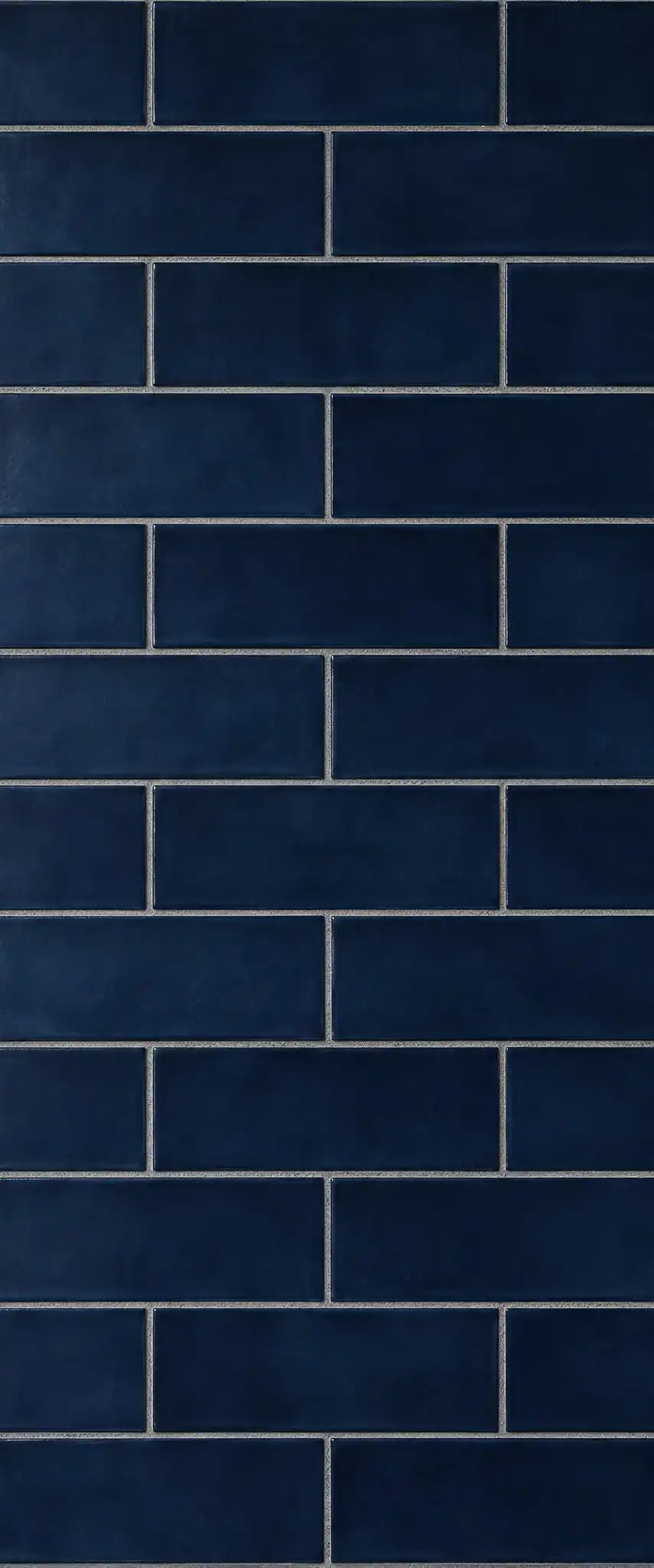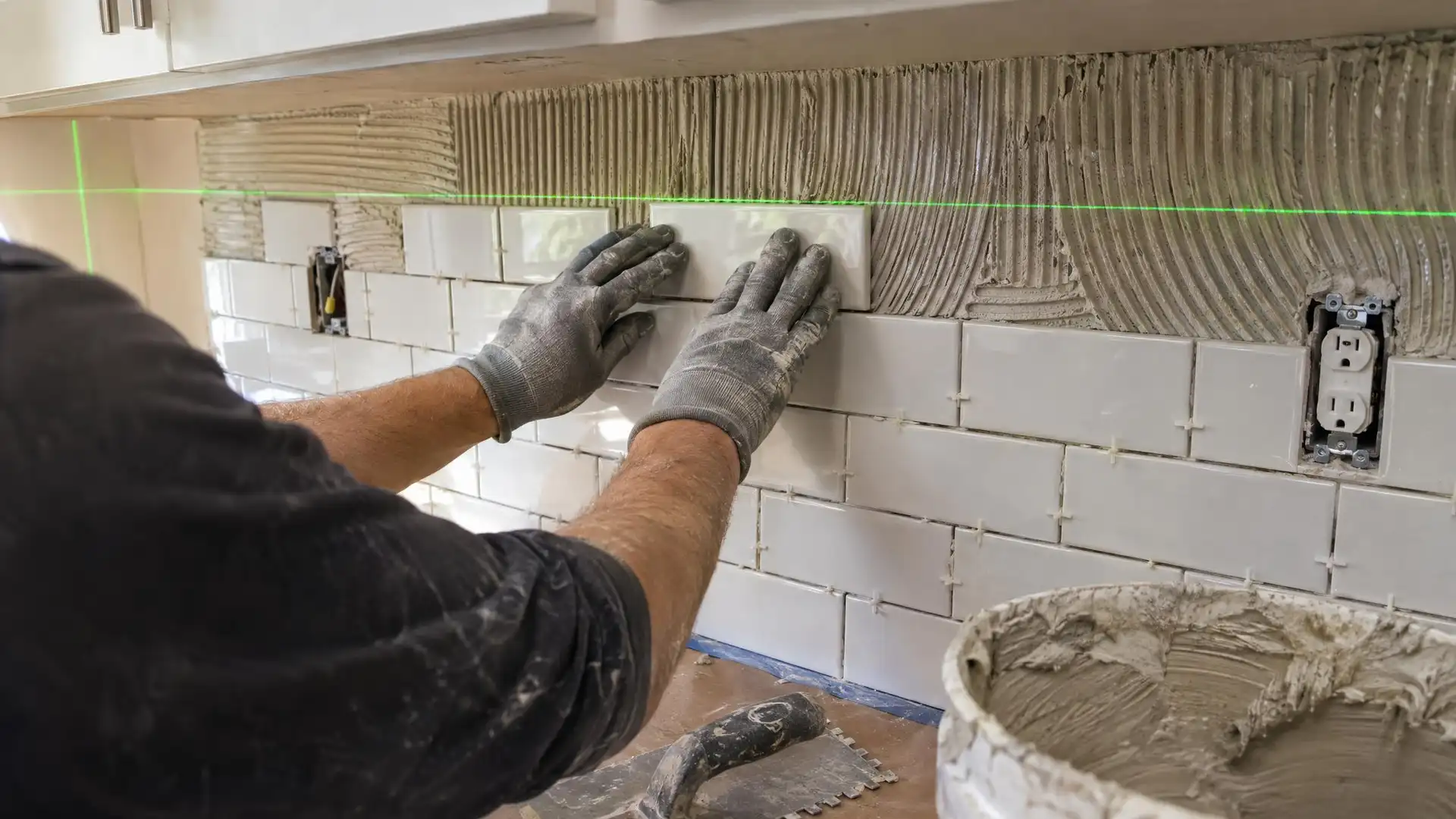
Subway tile has been going into kitchens for over a century because it suits almost anything: shaker cabinets, flat-panel modern, a 1940s Arlington colonial or a new-build townhome. It is affordable and easy to live with.
It is also unforgiving. A row that drifts out of level or joints that wander are obvious on a plain tile, which is why the layout and first course matter so much.
Patterns and What They Change
The same tile can read traditional or modern depending on how it is laid.
- Running bond (brick pattern): the familiar look, with each row offset by half
- One-third offset: a subtler stagger that suits longer tiles
- Horizontal stack: clean lines for a modern kitchen
- Vertical stack: makes a low backsplash feel taller
- Herringbone: more cutting and more labor, and a strong focal point behind the range
How We Install It
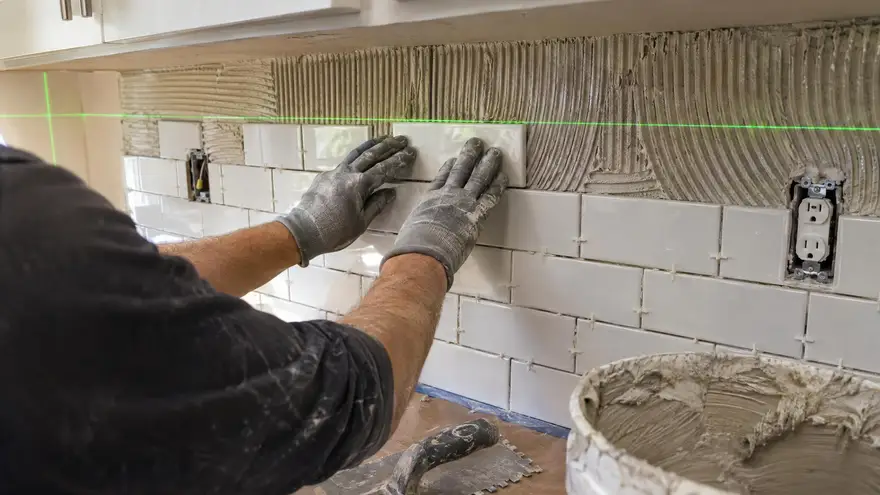
We find the low point of the countertop, set a level line from there and scribe the first row if the counter runs out. The layout is centered on the range or sink so cuts match at both ends. Outlets get box extenders so covers sit flush on the new tile.
Exposed ends are finished with a slim metal profile or matching bullnose. Joints are grouted and the line against the countertop is sealed with color-matched silicone.
Choosing Tile and Grout
Machine-made ceramic gives uniform lines. Handmade and zellige-style tiles vary in size and glaze, which is their charm, and need slightly wider joints. Grout color changes the look more than most people expect: white on white is quiet, gray or charcoal outlines every tile. See other options on our kitchen backsplash installation page.
Need something else? See all of our kitchen backsplash installation services, or learn more about your local tile contractor in Arlington, VA.