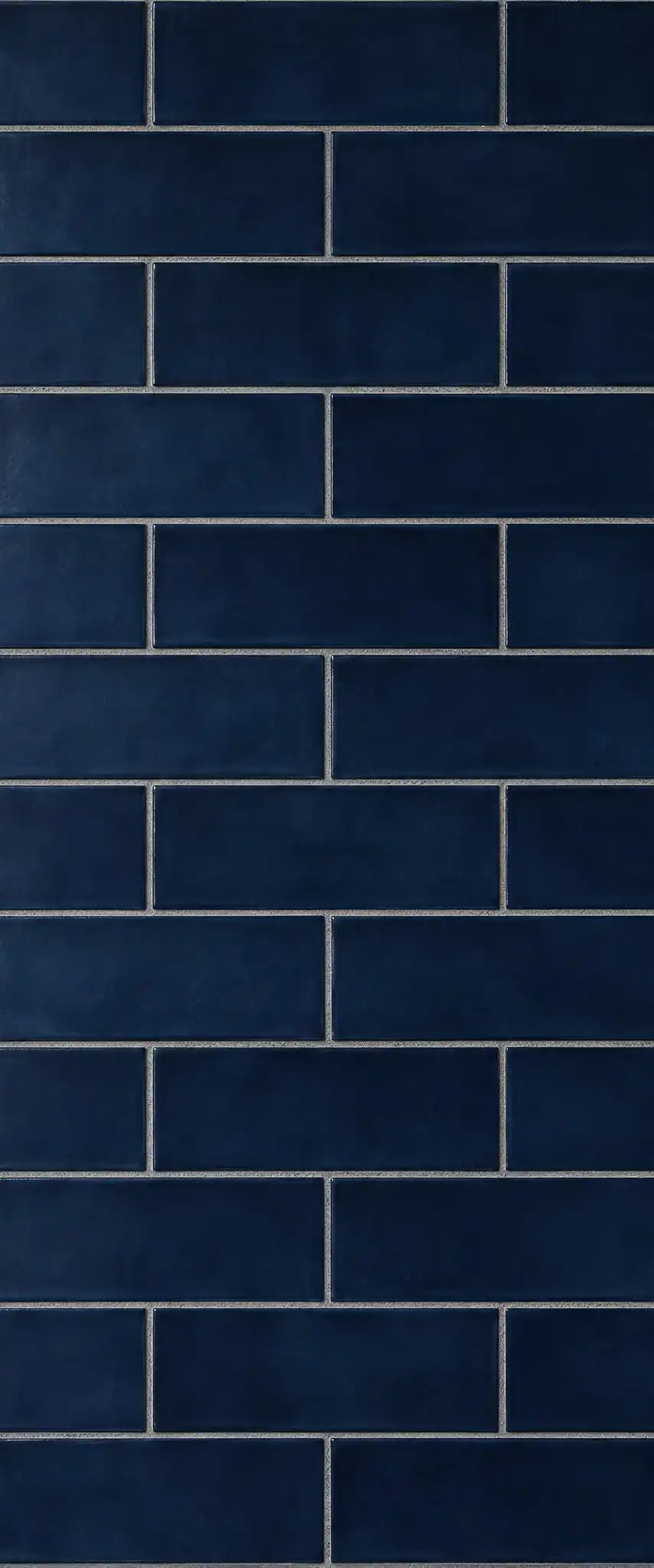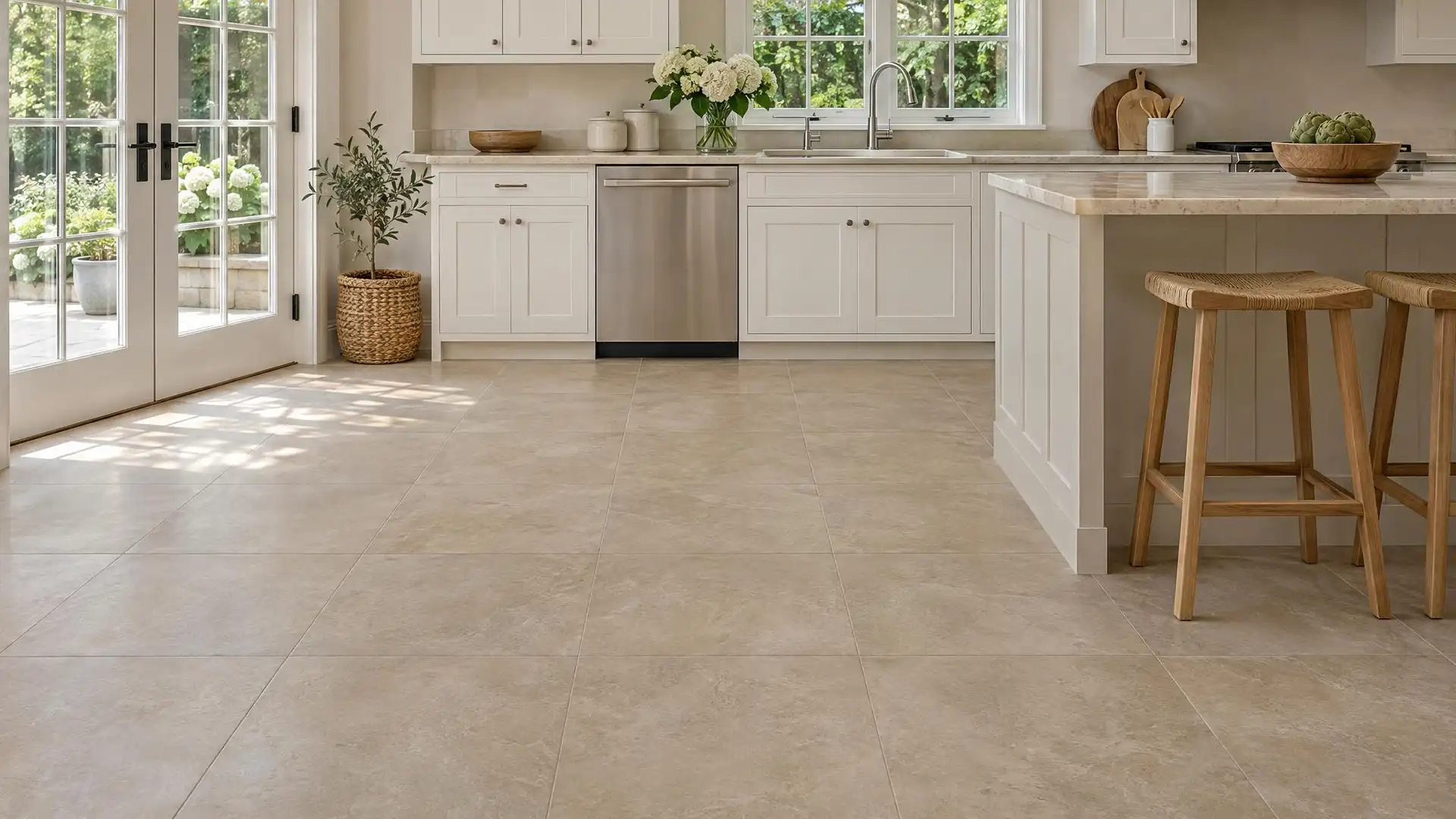
Porcelain is fired hotter and pressed harder than ordinary ceramic, which makes it dense, strong and almost non-absorbent. It works on floors, in showers and outdoors, and it comes in looks ranging from concrete and limestone to marble and wood.
That density means it will not grip a cheap adhesive. Porcelain needs a quality polymer-modified mortar and proper coverage, or tiles come loose later.
Why Homeowners Choose Porcelain
It solves most of the problems people have with other floors.
- Water absorption under half a percent, so it is suitable for wet areas
- Very hard wearing in kitchens, entries and hallways
- Stain resistant with no sealing needed
- Stone and wood looks without the upkeep of the real material
- Rectified edges on many lines, allowing narrow grout joints
- Suitable over electric radiant floor heat
How We Install It
After subfloor preparation, we lay out the room and dry-fit the pattern. Mortar is troweled in straight lines and each tile is pressed and moved to collapse the ridges. On larger tile we also apply mortar to the back. We lift tiles as we go to confirm coverage.
Porcelain is cut on a wet saw with a diamond blade. Holes for pipes and outlets are drilled or core-cut so the edges are clean.
Picking the Right Porcelain
For floors, look for a matte or textured finish and a wear rating suited to the room. Through-body or color-body porcelain hides chips better than a thin glaze. For big tile, see large-format tile installation, and for full-wall panels see porcelain slab installation.
Need something else? See all of our floor tile installation services, or learn more about your local tile contractor in Arlington, VA.