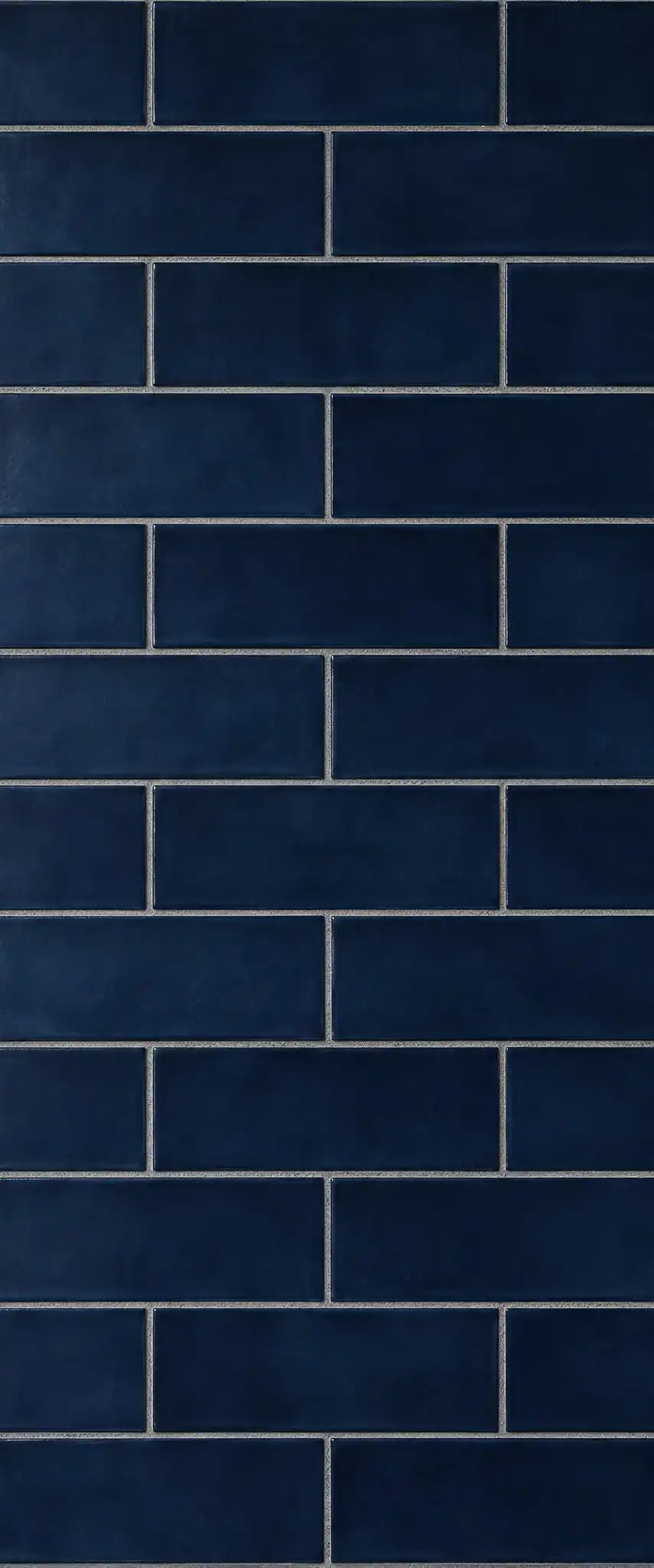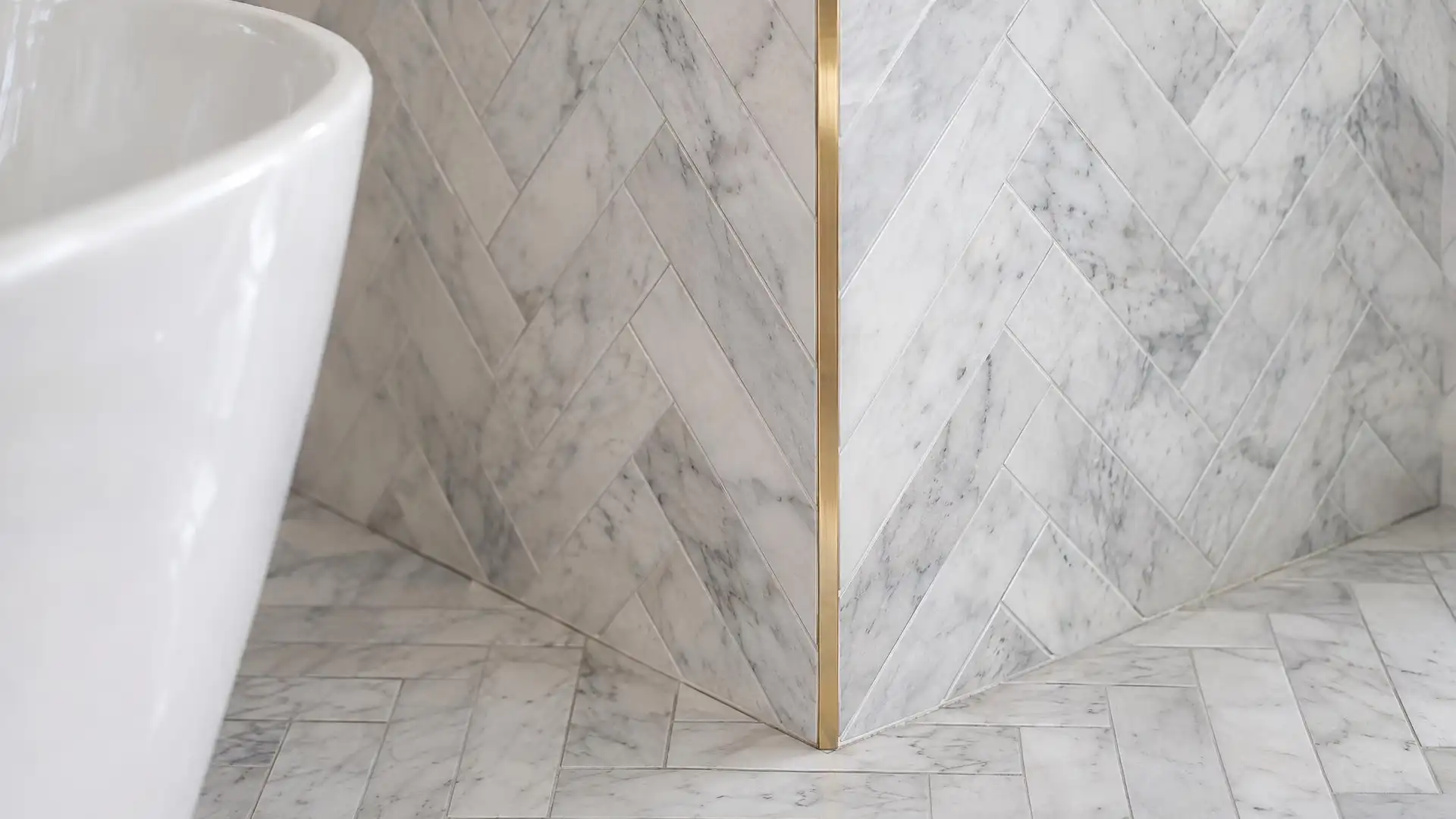
Mosaics are tiles roughly two inches or smaller, usually mounted on sheets. Hexagons, penny rounds and basketweave floors are part of the character of older Arlington homes, and they are just as popular in new bathrooms.
Their size makes them ideal for curved and sloped surfaces, and demanding to install well.
Where Mosaics Belong
They solve problems larger tile cannot.
- Shower floors, where small tile follows the slope to the drain and adds grip
- Bathroom floors in period homes
- Shower niches and accent bands
- Backsplashes and feature panels
- Curved walls, benches and columns
What Good Mosaic Work Looks Like
The surface underneath must be very flat, because small tile telegraphs every ridge. We use a fine-notched trowel and flatten the mortar so it does not squeeze up through the joints, then bed each sheet with a flat float so no tile sits proud.
Sheets are adjusted so the gap between them equals the gap within them. On patterned mosaics we check alignment across the whole floor rather than sheet by sheet, and cut borders so the pattern ends evenly at each wall.
Material Notes
Porcelain mosaics are the most durable and easiest to maintain. Marble mosaics are classic and need sealing; see natural stone tile installation. Glass needs white mortar and gentle cutting; see mosaic and glass tile backsplashes. More grout means grout choice matters, and we recommend a stain-resistant type.
Need something else? Browse all tile services, or learn more about your local tile contractor in Arlington, VA.