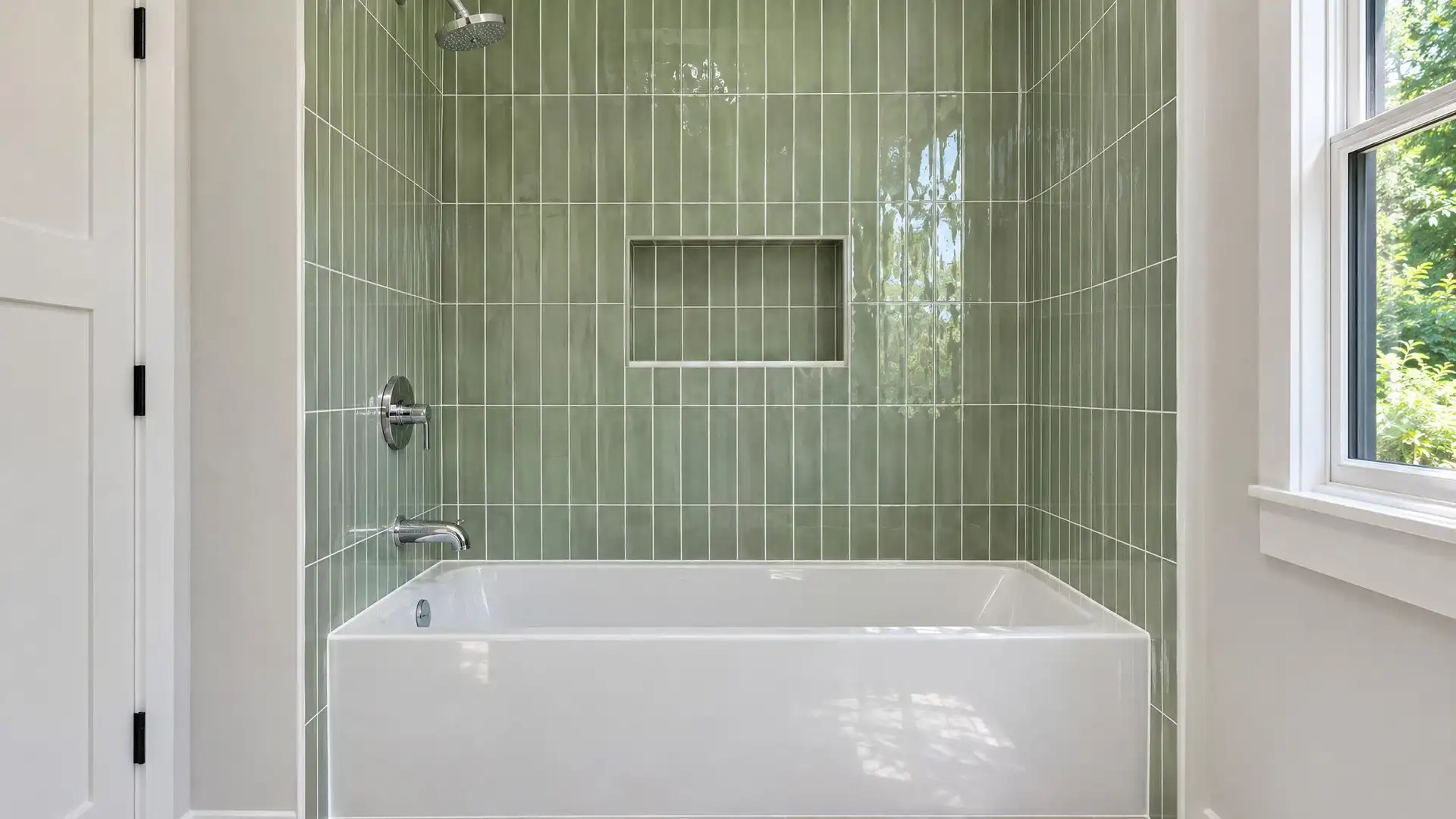
The three walls around a bathtub take more water than most people expect, especially when the tub doubles as the daily shower. In older Arlington homes the tile is often set on plain drywall or a mortar bed that has cracked, and the first sign of trouble is a loose tile near the faucet or a soft spot along the tub edge.
We rebuild tub surrounds properly: old tile and board out, new backer and waterproofing in, then tile that makes the whole bathroom feel new.
When a Tub Surround Needs Replacing
A surround can look acceptable and still be failing behind the surface.
- Tiles that move or sound hollow, especially in the bottom two rows
- Grout or caulk that turns black again weeks after cleaning
- A wall that gives slightly when you press on it
- Staining on the ceiling or wall on the other side
- A window in the surround with peeling paint or swollen trim
How We Rebuild It
We protect the tub, strip the walls to the studs and replace any damp insulation or damaged framing. New backer board is installed with a gap above the tub flange, then the walls are waterproofed and the membrane lapped over the flange so water runs into the tub rather than behind it.
Tile is set from a level line because tubs are rarely level, and the joint between tile and tub is sealed with silicone. If the valve is old, this is the time to replace it, and we can add a niche while the wall is open.
Keeping the Tub or Changing It
A cast iron tub in good condition is worth keeping. If yours is chipped, shallow or just in the way, consider bathtub replacement or a tub-to-shower conversion while the walls are open. It costs far less to do now than after new tile is in.
Need something else? See all of our bathroom tile installation services, or learn more about your local tile contractor in Arlington, VA.