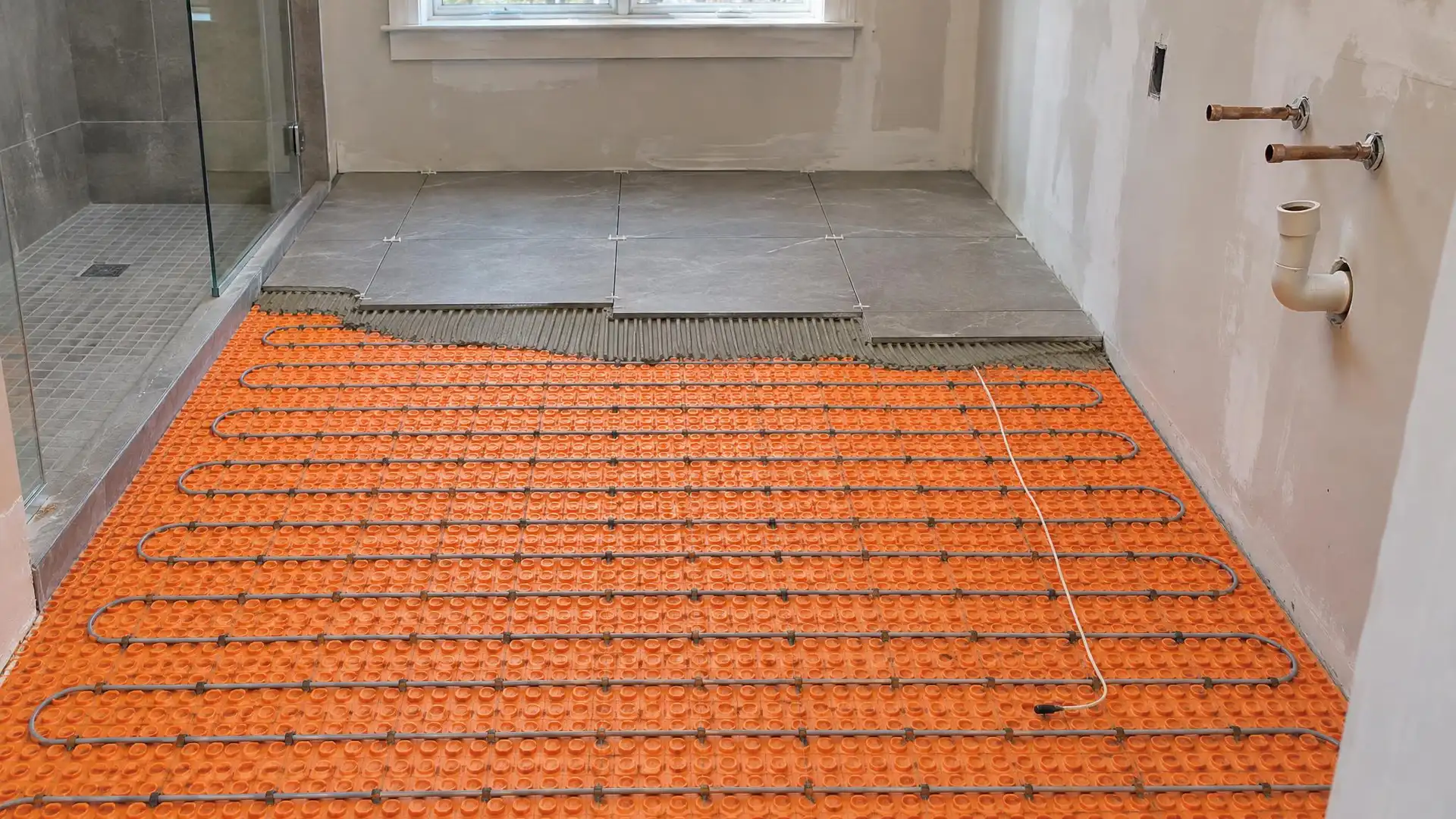
Tile is the best floor covering for radiant heat because it conducts and holds warmth. An electric system adds a thin heating cable beneath the tile, controlled by a thermostat on the wall, and raises the floor height very little.
The time to add it is during a tile installation. Retrofitting later means removing the floor.
How Electric Floor Heat Works
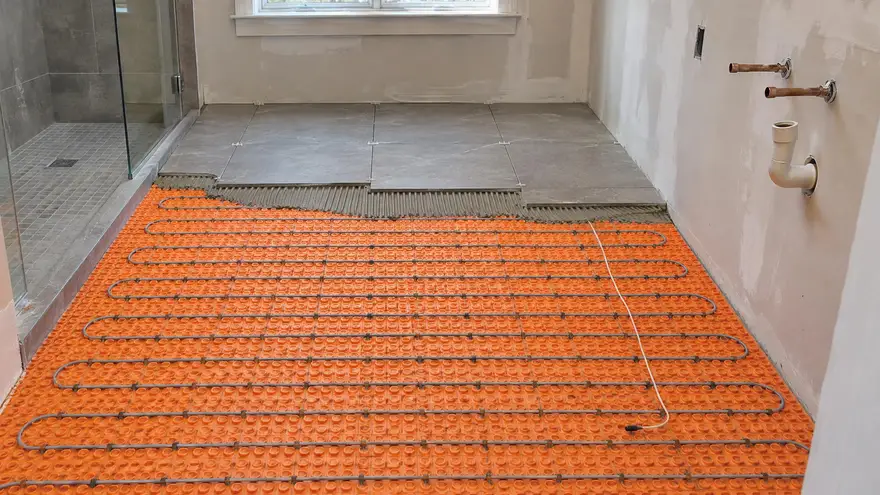
A heating cable is laid in a studded membrane or supplied as a mat, then covered in mortar and tile. A sensor in the floor reports to a programmable thermostat, which warms the floor before you get up and lets it cool while you are out.
Cable is laid only where you walk, not under the vanity, toilet or tub, which keeps the system smaller and less costly to run.
What Installation Involves
We handle the floor. A licensed electrician handles the circuit.
- A layout drawing showing heated zones and the thermostat position
- A dedicated circuit and thermostat box installed by a licensed electrician, with permit where required
- Membrane and cable installed over a prepared subfloor
- Cable resistance tested before, during and after tiling
- Two floor sensors installed so there is a spare
- Tile set over the cable with full mortar coverage
Best Rooms for Heated Floors
Bathrooms are the most popular, including running heat into a curbless shower and across a shower bench. Kitchens, mudrooms and basement bathrooms on cold slabs are next. In a small bathroom it is used for comfort; in a well-insulated room it can be the main heat source.
Need something else? See all of our floor tile installation services, or learn more about your local tile contractor in Arlington, VA.